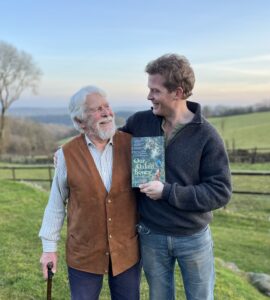
Robin and Merlin Hanbury-Tenison have both spent their careers in rainforests, but of a different kind. Explorer and author Robin has led over 30 expeditions for the Royal Geographical Society, many of them in tropical rainforests such as in the Amazon or Borneo. He is President and co-founder of Survival International, a charity which helps tribal peoples defend their lives, protect their lands and determine their own futures. www.survival-international.org. His son, author and veteran Merlin, is working to restore one of the last healthy fragments of Atlantic temperate rainforest on Bodmin Moor. They will discuss their work and adventures and also the similarities and differences of these two vital habitats.
 Hanna is an ornithologist at the Western Ukrainian Ornithological Society. She organizes citizen science projects on monitoring common bird species. From 2008 to 2012, Hanna studied at the Ivan Franko National University of Lviv. For the next four years, she worked at the State Museum of Natural History of the National Academy of Sciences of Ukraine. Since 2019, she has been working with the Frankfurt Zoological Society (FZS) in Ukraine as a communicator. And since 2023, she has been coordinating the support of environmental education activities across 12 protected areas in the Carpathians within the FZS Ukraine program and is the coordinator of the Lviv Nesting Bird Monitoring Program.
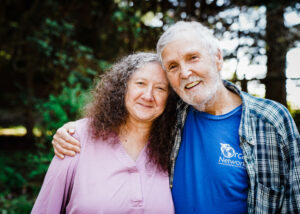 Howard Garrett received his degree in Sociology from Colorado College in 1980, and began working as field researcher with the Center for Whale Research on San Juan Island in 1981. Howard also spent time in New England, educating the public about humpbacks and other Atlantic whales. He returned to San Juan Island in 1993 and in 1995 began a campaign to return Lolita/Tokitae, a Southern Resident orca captured in 1970 off Whidbey Island, to her home waters in Puget Sound. He and his wife Susan Berta co-founded Orca Network in 2001, based on Whidbey Island. Howard gives educational presentations on orca natural history, conservation and captivity issues. Howard is often interviewed by media, including about the social and cultural aspects of orcas and the 1970 Orca captures in Penn Cove, featured in the film Blackfish in 2013.
Susan Berta received her Bachelor of Arts degree from The Evergreen State College in 1982, with majors in music and psychology. After a decade of working in the field of Social Work, in 1989 Susan became Program coordinator and co-founder of the Island County/WSU Beach Watchers (now Sound Water Stewards), an environmental education program for volunteers who give back to the community by volunteering and conducting community science projects such as a beach monitoring program which has now collected decades of data on Island County beaches. Susan’s office was in the Admiralty Head Lighthouse, where she often watched orcas traveling past Whidbey Island each fall, and soon her love of the whales led her to Howard Garrett, who with his brother Ken Balcomb had just founded the campaign to bring L pod orca Lolita/Tokitae home from her small tank at the Miami Seaquarium. By the year 2000, Susan’s observations of the orcas off Whidbey had blossomed into what is now the Whale Sighting Network, and she left Beach Watchers to co-found Orca Network with Howard in 2001. Together they continued the Tokitae Campaign, the Whale Sighting Network, and created the Central Puget Sound Marine Mammal Stranding Network. Educational programs and events were held for our growing community, and in 2014, Orca Network opened the Langley Whale Center on south Whidbey Island, to educate the public about the marine mammals of the Salish Sea, with a focus on Southern Resident orcas and North Puget Sound Gray whales. Orca Network also offers many opportunities for the public to engage in community science through participation in the Whale Sighting Network and Marine Mammal Stranding Network by gathering data used by researchers, agencies and organizations, including NOAA Fisheries, Cascadia Research Collective, and the Center for Whale Research. In 2007 Orca Network began “Orca Month”, proclaimed each June by the Governor, to raise awareness about the plight of the Southern Resident orcas, with Orca Month now also being celebrated in OR and BC.
In 2018 Orca Network was joined in our efforts to free Tokitae by the Lummi Tribe, and by 2023 plans were very close to finally getting her home, when she tragically passed away. In her memory and honor, Orca Network continues telling Toki’s story, and Toki’s gentle, but strong spirit continues to inspire people around the world, through a Program and new interactive exhibit at our Whale Center called Toki’s Legacy, which has an on-the-water component in the form of a large mural on an inside wall of the WA State Ferry Tokitae, and wall panels telling the story of the Southern Resident orcas, the orca captures, and what the Southern Residents need now to survive.
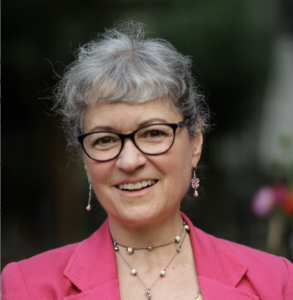 Darcia Narvaez is Professor Emerita of Psychology at the University of Notre Dame, and Fellow of the American Psychological Association, American Educational Research Association, Association for Psychological Science, and the American Association for the Advancement of Science. Born in Minnesota (USA), she grew up living around the world as a bilingual/bicultural Puerto Rican-German American but calls Earth her home. Her earlier careers include professional musician, business owner, classroom music teacher, classroom Spanish teacher, and seminarian, among other endeavors. She uses an interdisciplinary approach to studying evolved morality, child development and human flourishing. Her most recent books include Restoring the Kinship Worldview, and The Evolved Nest: Nature’s Way of Raising Children and Creating Connected Communities. Her book, Neurobiology and the Development of Human Morality: Evolution, Culture and Wisdom won the 2015 William James Book Award from the American Psychological Association and the 2017 Expanded Reason Award. Her recent short films are Breaking the Cycle, The Evolved Nest, and Reimagining Humanity. She hosts the webpage EvolvedNest.org and serves as president of KindredWorld.org which has just launched a Nesting Ambassador Program.
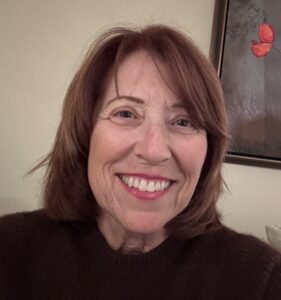 Karen Silton MA, PhD Before and throughout my career as an artist and art teacher-facilitator, I have been impassioned by the ethics of social justice and the seminal need for inner liberation. I have brought these two pursuits together in my work with unhoused women and other marginalized individuals and communities which has culminated with the founding of my nonprofit, Communities Create (www.communitiescreate.org) in 2018. As a professional artist, I have developed expertise in a variety of media including painting, ceramics, glass fusing and mosaics. This artwork has been widely shown in solo and group exhibitions in local and high-end juried art shows, all of which has cultivated a devoted following of collectors worldwide. In my calling as an artist, I have both volunteered and been commissioned to create multiple mosaic tile murals for Kehillat Israel, Pacific Palisades, Comunidad Cesar Chavez, Boyle Heights, Westfield Village, Woodland Hills, and The Getty Villa, Malibu, the latter which received special recognition as “Best Exterior Mosaic by the Society of American Mosaic Artists.”
As an arts educator, I have taught in public and private settings with diverse populations and all skill levels. By inviting renowned national and international mosaic artists to teach in my studio, I have helped expand mosaic education and attracted numerous in and out-of-state new and mature artists. My collaborations, diversely constellated through volunteering, commissions, contracts and grants, include Pierce Community College Extension, Skirball, Motion Picture and Television Fund, The Getty, Westfield Corp and the Boys and Girls Club of West Hills. For the past decade or more, I have focused on artmaking with marginalized communities. This work includes multiple partnerships: the Downtown Women’s Center (DWC), Skid Row, People Assisting the Homeless (PATH), Orange County, and Safe Place for Youth , Venice (SPY). With the advent of Covid, the mosaic classes held in my studio with small groups that focused on mosaic skill development and nurturing a sense of belonging and agency, temporarily shifted to virtual classes. As illustrated with my workshop with unhoused women described in a recent publication, the online experience was surprisingly incredibly successful (Creative Critical Pedagogies,in Using Arts-Based Approaches for Online and In-Person Learning, M. C. Desyllas and E. Papouli, Eds.). For the past eight years, I have held my Arts for Wellbeing workshops with unhoused women at the DWC. The core, and unique, philosophy and design of these workshops is their combined co-creation with participants and organizations, trauma-informed approach, art which is self-directed, and accompaniment. Following my master’s degree, I completed in 2024, a doctorate in Depth Psychology with Specialization in Community, Indigenous and Eco-psychology (CLIE) at Pacifica Graduate Institute, Carpinteria, CA.
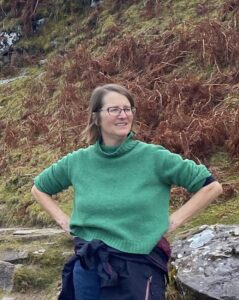 Virginia Farman is a choreographer-researcher and senior lecturer at the University of Chichester. Her practice investigates ways that dance might cultivate interior/exterior landscape dialogues between individuals and urban and rural environments; her recent productions include Smorgasbord (2025), Souvenir (2020), Children’s Games (2020) and a chapter for Encountering Environments Through the Arts (Routledge, 2025).
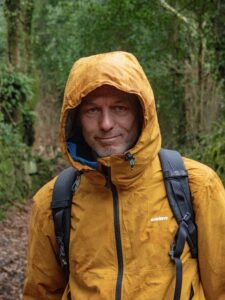 Plants have been an inspiration to Pete since childhood. They led him into mainstream higher education in horticulture, landscape architecture and ecology, before eventually nudging him off-road and into more alternative understandings of the Plant Realm, along with the wider web of Life.
He is honoured to be working with them now as portals to both deeper awareness of our ecological relationships and greater wellbeing within and without. As a freelance reconciliation ecologist and nature mentor he gives talks, guides walks, offers consultancy, writes and broadcasts in this spirit. You can find out more about him at www.futureflora.co.uk, or read his musings at https://plantaeconvivae.substack.com/.
Particular areas of interest are the climate impacts on floras, novel ecosystems, the positive reframing of plantae non gratae, and holistic perspectives on vegetation (ie, as Gaian tissue). He would welcome collaborative, synergistic enquiries toward the better understanding of our plant allies. He lives on the temperate rainforest-fringed north coast of Devon, UK.
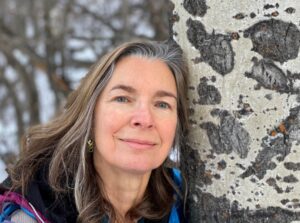 Marybeth Holleman was raised by North Carolina’s Great Smoky Mountains and lives in the embrace of Alaska’s Chugach Mountains. Her newest book is the novel Bloom Again. She’s also author of the poetry collection tender gravity and the memoir The Heart of the Sound, among others. She co-authored Among Wolves with wolf biologist Gordon Haber and co-edited Crosscurrents North, an anthology of Alaska prose and poetry. She’s also co-editor of the forthcoming Alaska Literary Field Guide. Her award-winning work has been published in over 50 venues including Orion, Christian Science Monitor, Sierra, zoomorphic, Plant-Human Quarterly, and The Guardian. She’s held artist residencies in such diverse places as Hedgebrook, Mesa Refuge, Ninfa, Denali National Park, and Tracy Arm Ford’s Terror Wilderness. marybethholleman.com
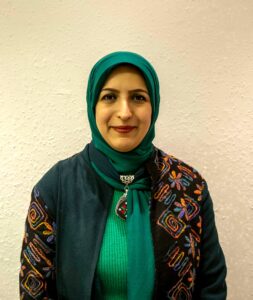 Azadeh Sobout’s research has centred on the complex encounters between critical urban studies, radical geography and transitional justice processes, engaging with post-war geographies, geographies of (in)justice and displacement, and decolonial epistemologies. She combines research-based teaching and action learning from several contested urban geographies in South and West Asia, the Balkans and Ireland with a focus on non-conventional urbanisms, continuous displacement and migration, spatial violence and housing justice.
 The Animated Wor(l)ds project brings together scholars, writers, artists and creatives who are seeking to cultivate multispecies kinship by encouraging alternative ways of relating to, thinking about, and entering into conversation with the animate world. We embrace the semiotic dimensions of relationality and language in its relational capacity as pathways to honor biocultural diversity and challenge harmful, oppressive ideologies. By animating the words of more-than-human worlds, we cultivate care and attentiveness towards all beings, attuning to the languages of other animals, plants, and ecosystems. In our collective efforts, we employ speculative and reflective narratives to transcend normative discourses and creatively explore possible multispecies futures. Contributors and co-editors of this project (which will be published by the Online Publication Service of the University of Chicago) include:
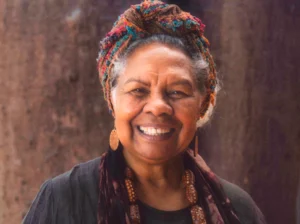 Professor Anne Poelina is a Nyikina Warrwa woman from the Kimberley region of Western Australia. She is an active community leader, human and earth rights advocate, film maker and respected academic researcher, with a second Doctor of Philosophy (First Law) titled, ‘Martuwarra First Law Multi-Species Justice Declaration of
Interdependence: Wellbeing of Land, Living Waters, and Indigenous Australian People’ (Nulungu Institute of Research, University of Notre Dame, Broome, Western Australia).
Anne, winner of the 2024 Geoethics Medal is also the Murray Darling Basin (MDB) inaugural First Nations appointment to its independent Advisory Committee on Social, Economic and Environmental Sciences (2022), and member of Institute for Water Futures, Australian National University, Canberra. Poelina was awarded the Kailisa Budevi Earth and Environment Award, International Women’s Day (2022) recognition of her global standing. Poelina is also an Ambassador for the Western Australian State Natural Rangelands Management (NRM) (2022).
 Rimona Afana is a Romanian–Palestinian researcher, lecturer, activist, and multimedia artist. Her research on crimes against humans and nonhumans is published in leading law and criminology journals and books, and her artwork appears in literature journals, arts magazines, festivals and exhibitions. Over the past twenty years she has also contributed to many civic projects on human and nonhuman rights, in different countries.
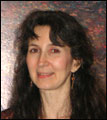 Mary Finelli is President and Chairperson of Fish Feel, and she chairs the Save the Rays Coalition. Mary is a long-time animal rights activist with a B.S. in Animal Science. She has worked with various animal protection organizations, primarily focusing on farmed animals. Mary was the Producer of Farmed Animal Watch, a weekly online news digest sponsored by numerous animal protection organizations. She has contributed a chapter to Vegan Voices, and co-wrote a chapter of In Defense of Animals: The Second Wave (which has also been published in both editions of The Animals Reader).
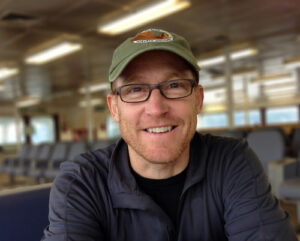
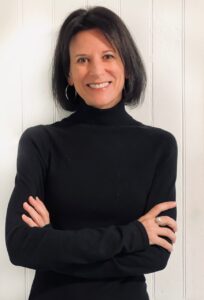 This is a special workshop presented by Midge Raymond and John Yunker, co-founders of the vegan-owned publisher Ashland Creek Press (www.ashlandcreekpress.com). Midge Raymond is the author of the novels Floreana and My Last Continent and the award-winning short-story collection Forgetting English. John Yunker is the author of the novel The Tourist Trail and editor of the Among Animals fiction series and a nonfiction anthology, Writing for Animals. Midge and John recently published the book Animal Writes: Prompts and Practices to Guide the Animal Writer’s Journey.